Landing a Corporate Sustainability Role: Why Companies Are Hiring Policy-Savvy Graduates
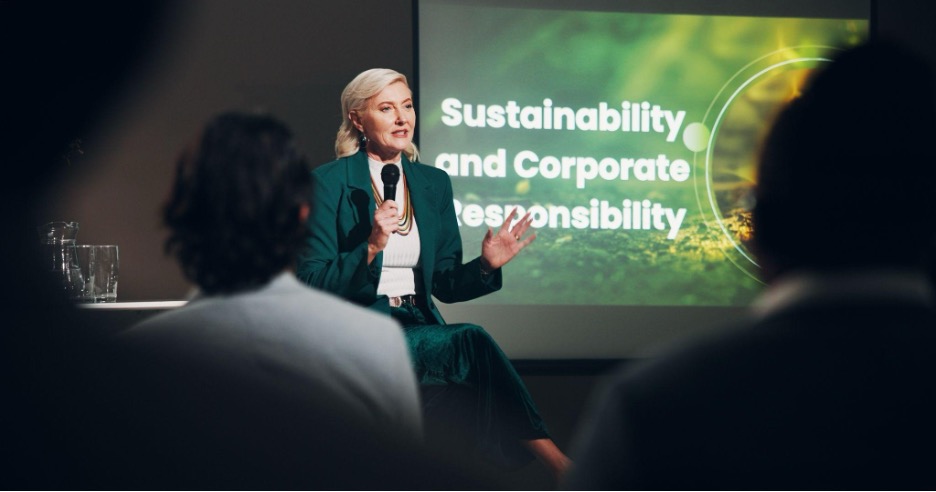
For years, sustainability careers have been largely associated with government agencies, nonprofits, and environmental advocacy organizations. Today, that landscape is changing rapidly. From multinational manufacturers to financial institutions and technology firms, companies are integrating sustainability expertise into their core business operations.
The result? A growing demand for professionals who understand not only environmental science but also the policy frameworks shaping the future of business.
As climate regulations expand, disclosure requirements become more complex, and investors increasingly evaluate environmental performance, companies are seeking professionals who can translate policy into strategy. For graduates with advanced training in environmental and sustainability policy, this shift represents a significant career opportunity.
The Corporate Green Hiring Boom
While sustainability initiatives often focus on environmental outcomes, the forces driving corporate action are increasingly rooted in policy. Companies across regions must navigate evolving regulations, reporting requirements, and stakeholder expectations, but the specific policy landscape varies significantly by market.
In Europe, frameworks such as the European Union’s Corporate Sustainability Reporting Directive (CSRD) have increased the importance of sustainability reporting and disclosure. In the United States, federal, state, and sector-specific environmental and climate policies create a different regulatory landscape for businesses. Across both markets, and increasingly in other regions, companies must understand how changing policy environments can affect operations, risk, investment, and long-term strategy.
Business leaders need professionals who can answer critical questions:
- How will new regulations affect operations and reporting requirements?
- What climate-related risks could impact future profitability?
- How should companies prepare for evolving emissions standards?
- What investments are needed to stay competitive in a low-carbon economy?
These challenges require more than environmental expertise alone. They require professionals who can interpret policy developments, forecast risk, and help organizations develop proactive strategies. In other words, companies are increasingly hiring policy-savvy sustainability professionals because compliance is no longer enough. Organizations need employees who can transform regulatory complexity into a strategic advantage across increasingly interconnected markets.
From Compliance to Corporate Strategy
Here we get into the core of the problem: why economic logic meets resistance when implementing carbon pricing. Several interrelated reasons:
One of the biggest shifts occurring in corporate sustainability is the transition from compliance-focused work to strategic leadership. The pace and nature of this shift vary by region and industry, but the broader trend is increasingly visible across global markets.
Sustainability functions have traditionally focused heavily on environmental reporting, disclosure, and regulatory compliance. Today, leading organizations are increasingly integrating sustainability into decisions involving capital allocation, operations, supply chains, risk management, and long-term business strategy.
Climate policy, resource constraints, and environmental risk now have direct implications for business performance. As a result, sustainability professionals are increasingly working across finance, legal, operations, and executive leadership teams to help organizations anticipate future challenges.
This evolution has created demand for professionals who can bridge multiple disciplines, including environmental science, economics, law, and data analytics. The ability to connect environmental outcomes with business objectives and to understand how those relationships vary across regulatory and economic contexts is becoming one of the most valuable skills in the modern sustainability workforce.
Why Employers Value Graduates with Advanced Sustainability Policy Training
As sustainability roles become more strategic, employers are increasingly looking for candidates with interdisciplinary training. Graduate-level education provides a distinct advantage because it develops expertise across the areas businesses need most: environmental science, economics, policy analysis, quantitative methods, and stakeholder engagement.
Research on sustainability careers consistently shows that professionals with interdisciplinary backgrounds enjoy strong career mobility and access to leadership-track opportunities. Employers increasingly seek candidates who can evaluate environmental challenges through both scientific and economic lenses while understanding the regulatory context that influences corporate decision-making.
This combination of skills is particularly valuable in sectors experiencing rapid sustainability growth, including:
- Financial Services—Financial institutions are expanding sustainability teams to address climate risk assessment, sustainable investing, and green bonds.
- Energy and Utilities—As governments establish emissions reduction targets and energy transition policies, companies need professionals capable of navigating complex regulatory environments while supporting decarbonization strategies.
- Manufacturing and Supply Chains—Organizations are redesigning sourcing practices, emissions reporting systems, and operational processes to meet evolving sustainability expectations.
- Consulting—Leading consulting firms increasingly advise clients on sustainability strategy, climate risk, and environmental compliance, creating opportunities for graduates with advanced policy expertise.
How Cornell’s MS in Environmental and Sustainability Policy Prepares Future Sustainability Leaders
The Cornell Brooks School’s Master of Science in Environmental and Sustainability Policy (MS-ESP) was designed to prepare graduates for this evolving marketplace.
Sustainability challenges do not stop at national borders, and neither do the policy and business decisions that shape them. Cornell’s global reach and interdisciplinary sustainability ecosystem give students opportunities to examine environmental challenges from multiple geographic and institutional perspectives. The Brooks School connects students with faculty, practitioners, researchers, and partners working on environmental policy challenges ranging from local and U.S. issues to international sustainability priorities.
This 12-month Ivy League master’s program equips students with the interdisciplinary skills organizations increasingly demand. Through rigorous training in policy, economics, law, data analysis, and sustainability, students learn how environmental challenges intersect with business, governance, and society.
The program’s immersive curriculum explores critical issues such as climate policy, energy systems, conservation, food systems, environmental justice, and resource management. Students gain practical experience through a hands-on capstone project, allowing them to apply classroom learning to real-world sustainability challenges.
Importantly, the program develops a skill set that aligns directly with private-sector needs:
- Policy analysis and interpretation
- Data-driven decision-making
- Environmental risk assessment
- Economic evaluation
- Strategic problem-solving
- Stakeholder engagement and communication
These competencies position graduates to contribute across corporate sustainability, energy strategy, consulting, resource management, and environmental governance roles—whether those opportunities are rooted in U.S. markets or increasingly interconnected global ones.
The New Sustainability Professional
Today’s most successful sustainability professionals are not simply environmental advocates; they are translators, strategists, and problem-solvers. They understand how environmental science informs policy. They recognize how policy influences markets. And they help organizations make decisions that balance environmental responsibility with long-term business success.
For graduates entering the workforce, this represents an exciting shift. Sustainability expertise is no longer confined to a single department, sector, or national market. It has become a core business function, with professionals increasingly expected to understand how policy, markets, environmental risks, and business strategy intersect across regions.
For students pursuing advanced education in environmental and sustainability policy, the opportunity is clear: the future of sustainability leadership increasingly sits inside the boardroom as much as it does in government offices or nonprofit organizations.
At Cornell, students can build the interdisciplinary and globally informed perspective needed to navigate that evolving landscape, preparing them to contribute to sustainability challenges and opportunities wherever their careers take them.
Hear More About the MS-ESP:

Request More Information
MS in Environmental and Sustainability Policy (ESP):
Turn your passion for the planet into a rewarding career.