
Brooks School Spotlight: Angel Puder MPA ’26
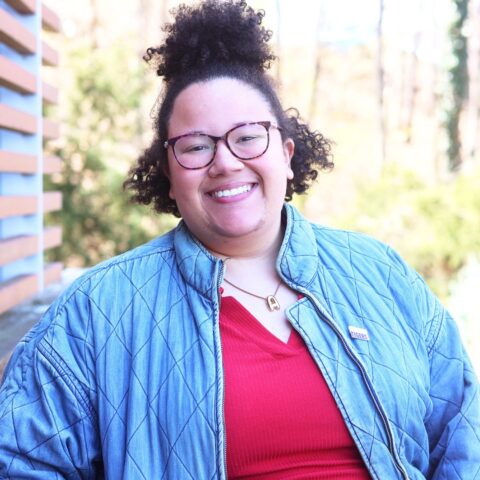
Meet Angel Puder MPA ’26
Angel Puder is a Master of Public Administration student in the Class of 2026. A Houston native and former AmeriCorps VISTA, she is passionate about food security, affordable housing, and community-driven policy solutions.
Q: Where are you from, and what ultimately led you to pursue a career in public service?
I’m from Houston, Texas, a born and raised Texan. I studied Political Science and African and African American Studies at Louisiana State University (LSU). Geaux Tigers!
I served as an AmeriCorps VISTA at Fifth Ward Community Redevelopment Corporation, where I gained a love for public service. My uncle has worked on food security issues within public schools in Texas since I was little, which cultivated my interest in food security and affordable housing.
Q: How did advancing affordable housing initiatives in Houston during your VISTA experience shape your decision to pursue an MPA?
I loved being a part of the planning, decision-making, and implementation process of community projects that benefit Houstonians. I was excited by the overall process and could see a future in this line of social impact work.
I knew during that year that I needed more experience in project management strategies and technical skills to be more efficient and effective for our beneficiaries. While the process was slow and I could not see the impact of my work immediately, I knew it would positively impact Houstonians down the line.
Are there specific Brooks courses, professors, or hands-on experiences that have significantly shaped your academic journey so far?
- PUBPOL 5360: Program Evaluation for Community Organizations with Dr. Aubryn Sidle: I loved this course and the hands-on experience I gained as my group researched and produced a program evaluation for AGE Africa, a Malawi-based girls’ empowerment organization. In the first half of the course, we learned theory and structure through lectures and readings and then we applied it. We met with AGE Africa weekly, produced program evaluation tools, and presented a final deliverable and presentation that they could use to implement the program evaluation for their radio program. Dr. Sidle has been an amazing resource to explore domestic and international nonprofit and public consulting, as I graduate this May.
- PUBPOL 3790/5790: Community Impact Analysis in Development Policy I with Dr. Julie Ficarra: My capstone included partnering with the Reynolds Foundation to conduct a community impact analysis for the ANI Art Academy in the Dominican Republic. Our 15-person research team broke into four groups focused on Retention, Professionalism, Community Impact, and Data Analysis, and conducted field research in Rio San Juan, DR, in January. This March, we created a final report and presentation for the ANI Art stakeholders.
- Associate Teaching Professor Dan Lamb exposed me to local government connections, including my internship with the City of Ithaca.
Q: Tell us about your internship with the City of Ithaca. What was the focus of your work?
I reached out to the Ithaca City Manager in January and met with her and the Deputy City Manager to discuss topics and scope. We narrowed our focus to homeless encampment research to lay the foundation for the encampment protocols the City would propose to the Common Council.
During Spring 2025, I conducted an impact and cost-benefit analysis of homelessness and encampment management strategies to inform the City’s administrative and legislative decision-making for Encampment Protocols. I also produced a comprehensive white paper synthesizing economic data, service utilization metrics, and stakeholder input to guide citywide implementation planning, and coordinated with municipal stakeholders to translate research findings into actionable recommendations and briefing materials for city leadership.
Q: Could you tell us more about the research for your white paper titled “The Economic and Human Cost of Homelessness in Ithaca?”
The most interesting aspect of the research was seeing the diversity of projects implemented across the U.S. that Ithaca could base its recommendations on. Boston had a health-focused program, while Beaverton, Oregon, created an inclusive parking program for people living in their vehicles. It showed a great level of creativity with limited resources across governments and nonprofit partnerships.
Q: You’re deeply involved on campus — from Women in Public Policy to Black in Public Policy and student governance. What motivates you to take on leadership roles while balancing graduate school?
I have always loved leading and mentoring where I can. It feels like a calling, and many people in my life (friends and family) have motivated me to take on those roles for others. By leading, I can give back to my community by dedicating time to effectively support organizations of any size.
I wanted to lead WIPP as Co-President to create an environment to empower women in policy through speaker events, alumni networking, and community-building. As a founding board member of Black in Public Policy, I wanted to help create an inclusive space for Black policy students to come together and find community and safety while attending a predominantly White institution and an Ivy League.
I also serve as the PR Manager for the Cornell Negotiation Student Society (CNSS) and as Secretary of the Omicron Nu Omega Chapter of Alpha Kappa Alpha Sorority Inc. (Ithaca Graduate Chapter). Alpha Kappa Alpha engages in extensive community service in the Ithaca community.
At times, it can be difficult to balance school and other commitments, but I try to practice delegation and know when to say no by staying aware of my limits.
Q: What’s one skill or strength you’ve discovered in yourself since starting the MPA?
I’ve gotten a lot better at trusting people and delegating work to make things happen. I know I can’t do it all myself, so I’ve let some things go—not to be perfect, but done.
Q: How has your experience influenced your long-term goals?
My experience at Brooks has strengthened my passion for social impact issues (food security, affordable housing) and expanded my idea of the “ideal” organization to work for. I know I want to make a positive impact on people, and I can accomplish that in multiple areas.