Why a Master’s Degree in Environmental and Sustainability Policy, and Why Now?
By: Professor Sheila Olmstead
The 30th Conference of the Parties (COP) to the UN Framework Convention on Climate Change just wrapped up in Belém, Brazil, and climate change is in the news – again. This meeting marks the 30th time since 1995 that countries have gathered to negotiate shared solutions to climate change, and yet global CO2 emissions have grown by almost two-thirds over these three decades. The world faces big environmental challenges, making environmental policy incredibly dynamic today and for the foreseeable future, given:
- the rapid pace of warming and its economic, ecosystem, and social impacts,
- the very different paths major economies are taking toward addressing the challenges associated with that trend,
- the strong market forces driving down the cost of technologies like renewable electricity generation and electric vehicles that hold the keys to robust, clean economic growth,
- major geopolitical events changing the landscape for traditional energy markets (like oil and gas) that operate at the global scale,
- an abrupt shift from globalization to deglobalization in trade regimes and intense competition for critical minerals and other resources that will “win the future,”
- declining biodiversity, accelerating deforestation, and increasing economic and social pressure to clear habitat for other uses,
- political polarization in the U.S., Europe, and elsewhere and its implications for crafting robust domestic policy and challenging existing policy on a host of environmental issues.
Building Your Policy Skillset
Now, more than ever, is a great time to pause and build the skillset to engage in this exciting arena. Cornell Brooks’ new 12-month Master of Science in Environmental and Sustainability Policy (MS-ESP) will train you to think critically and analytically about the causes and consequences of environmental problems, and to work toward solutions.
The physical causes of environmental change are clear in many cases. For example, the burning of crop residue in rural India exposes residents of New Delhi to dangerous levels of air pollution that harm human health; emissions from fossil fuel combustion are increasing the global mean surface temperature; and runoff from farms and cities is contributing to “dead zones” in coastal waters around the world. You might not know that a growing body of evidence also quantifies the economic costs of trends like these, and points to both socioeconomic causes and the possibility of constructive, efficient and equitable policy solutions. Research can also tell us how to communicate constructively about environmental policy problems to different audiences, and what kinds of political coalitions may be possible to move the ball forward.
What You’ll Learn in Cornell’s MS-ESP Program
Come spend a year learning from top-notch faculty – experts in fields like communication, economics, political science, statistics and data science who bring their research, community partnerships, and policy experience into the classroom. Our curriculum is designed to hone your critical thinking and leadership skills and to improve your topical knowledge on environmental policy, focusing on:
- Environmental law, regulation, and ethics
- Policy communication for sustainability
- Statistics and data analysis for public policy
- Environmental economics and policy
- Environmental justice and equity
- Political analysis and governance
- Managing and leading organizations
Graduates with degrees in environmental policy may find positions in the private sector, within international institutions, legislatures and government agencies at all levels (national, state, and local), as well as non-profit research and advocacy organizations.
At Cornell Brooks, we see ourselves as training students for their next job and for their last job. This may seem impossible given pace of change in the world. We think the key is to provide students with the skills they will need to stay flexible and adapt to new policy settings, analysis tools, and environmental challenges; to be lifelong learners with strong professional networks; and to support those inevitable career transitions just over the horizon. Join a group of highly motivated peers applying to our exciting new degree program for a Summer 2026 start!
About the Author
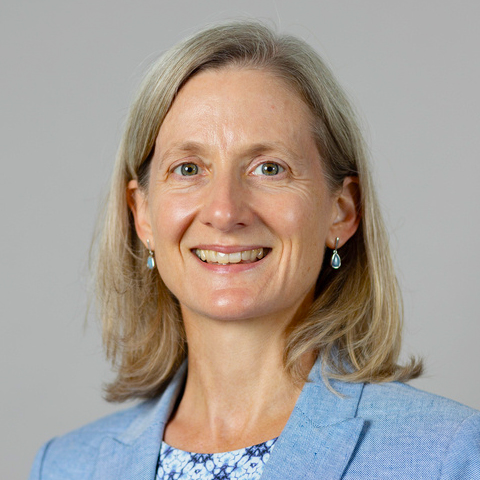
Sheila Olmstead, Professor of Public Policy and Cornell Atkinson Fellow
Professor Olmstead studies the economic dimensions of environmental policies, especially those related to water quantity and quality. Her research has influenced academic thinking and regulatory policies on topics including climate change and water resource management, the effect of various pricing strategies on water conservation, economics and water quality considerations around shale gas development, measuring the economic value of improved water quality, and the effect of carbon capture and storage on local air pollution.

Request More Information
MS in Environmental and Sustainability Policy (ESP):
Turn your passion for the planet into a rewarding career.