
Digital Governance at the Border: Balancing Surveillance, Security, and Civil Liberties in Punjab
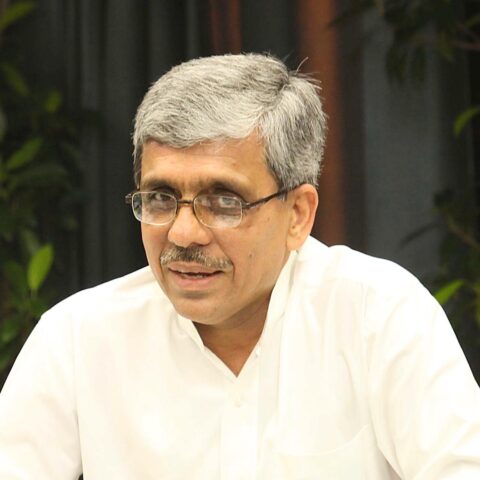
BTPI Fellow Basim Ali sat down with Suresh Kumar, a senior Indian civil servant and former Chief Principal Secretary to the Chief Minister of Punjab – a northern Indian state with significant administrative and geopolitical relevance – to discuss the interplay between internal security, digital governance, and participatory policymaking.
Suresh Kumar is a senior Indian civil servant with more than three decades of experience in public policy, governance, and institutional reform. A member of the Indian Administrative Service since 1983, he served as Chief Principal Secretary to the Chief Minister of Punjab from 2017 to 2021. He has held key leadership roles in both the federal and state governments, with a focus on administrative modernisation, pro-poor development programs, and sectoral policy reforms in areas such as agriculture, water resources, energy, cooperatives, rural infrastructure, and public service delivery. He played a pivotal role in shaping Punjab’s water and agriculture policies and has led large-scale initiatives including the Punjab State Agriculture Diversification Plan and the Rural Drinking Water Supply and Sanitation Strategy. An alumnus of the London School of Economics and Delhi University, he has also contributed to international policy networks, including the University of Cambridge’s TIGR2ESS project and UN working groups on education and gender.
Basim: Let’s begin with a broad overview to help contextualize the discussion for our audience. For those who may be unfamiliar with the region, could you provide some background on the Indian state of Punjab and the key security challenges it currently faces?
Suresh Kumar: Punjab, as a border state, shares a 554 km long international boundary with Pakistan. Historically, it’s been a land of vibrant culture and resilient people, but it has also experienced its share of turbulence. Post the Partition of 1947, the state saw massive demographic shifts. A once multicultural society became predominantly Sikh and Hindu after most Muslims migrated to the western side. Over the years, despite facing partition, the Green Revolution, and the violent insurgency of the 1980s, Punjab has managed to remain progressive.
The economy is still largely agrarian, with wheat and rice production contributing significantly to the national food pool. But agriculture today is stagnating. Productivity has plateaued, and returns for farmers are diminishing, leading to economic distress. While service and industrial sectors are growing, the pace is inadequate. A significant proportion of the population, especially youth, still relies on farming for livelihood. When economic prospects are weak and unemployment persists, it often creates fertile ground for exploitation by anti-social and extremist elements.
On the security front, Punjab faces a modern reinterpretation of age-old challenges. The state contends with persistent threats from narcotics, arms smuggling, and infiltration, with drones introducing a worrying new dimension to these issues. Coupled with the rise of digital propaganda and radicalization, these challenges necessitate a sophisticated, technology-driven approach to safeguarding the region’s stability and future.
Basim: We recently saw Punjab showcasing portable and stationary anti-drone systems to counter cross-border drug consignments. Could you elaborate on their limitations and the importance of layered defence?
Suresh Kumar: Certainly, Basim. What we are seeing now is a scenario where drones have become tools for those who wish to harm national security. They are being used to send arms, ammunition, narcotics, and even counterfeit currency. Punjab Police has been proactive. In some pilot projects, both portable and stationary anti-drone systems were deployed. Now, each of these has its advantages and limitations. Portable systems are easy to carry, and they give flexibility. They are good for patrolling and can be quickly relocated based on intelligence inputs. But their range is limited. They don’t function well in bad weather, and the neutralization capability is still evolving. On the other hand, stationary systems offer better accuracy, radar-based detection, and sometimes even automated neutralization features. But they are costly and fixed—they can’t cover changing routes or shifting patterns unless they’re widely deployed, which is not economically viable.
So, we are talking about a layered approach. You detect it first – preferably through portable systems that alert us. Then you act – either using a fixed neutralization point or through coordinated ground response. This is still in a trial stage, but as you said it, as everybody says, there are challenges, challenges of weather, challenges of range, challenges of affordability, and then you have to meet with these challenges. Work with all the agencies involved in the border security, army, Border Security Force, the local police, the other central forces etc. to check these unmanned aerial vehicles which promote and instigate crime in our area.
Basim: Thank you for that. I’d like to explore a slightly different angle. Do you think the increasing use of technologies like drones by organized crime groups has made these elements more sophisticated and, in turn, created greater challenges for law enforcement? Specifically, since drones are now being used for precise, targeted deliveries. Has this shift made it harder for law enforcement agencies to effectively respond?
Suresh Kumar: That’s a pertinent point, Basim. Ideally, the first use of drones should have come from law enforcement and disaster response teams. But in reality, it’s been the other way around. Organized crime networks have used drones for smuggling. They’ve also adapted quickly – changing flight paths, upgrading to longer-range drones, and modifying payloads.
A recent report in a national daily – The Tribune Chandigarh stated that around 35 drones have been neutralized by the Punjab Police in the month of April 2025. Each of these drones has been thoroughly analysed. The data was processed in our cybercrime cells and the dedicated drone analysis units set up by Punjab Police in the border districts. Interestingly, all these drones were of Chinese make – called DJI. This poses a serious challenge, and to address it, we need to strengthen our counter-UAV capabilities. That means not only developing the technology but also promoting its adoption, ensuring its availability, and making it affordable. I believe the Government of India is fully seized of the matter. Significant steps are being taken – perhaps not all are in the public domain – but pilot projects have expanded, and newer technologies are gradually being infused into state police forces as part of the national modernization agenda. This is a priority for both the Government of India and the Punjab state government.
At the same time, Punjab Police is fully aware that a centralized approach will not work. You cannot expect that every drone that is captured, or every piece of data collected, be sent to a central location for processing. That’s neither efficient nor practical. Decentralization is key. Local-level processing is essential, and more importantly, we must involve the local community. This is particularly important because, as you’ve pointed out in your questions as well, we sometimes encounter false reports or false positives. Now who can help verify those? Who can tell us whether a threat is real or mistaken? It’s the local people, those with firsthand knowledge of the ground reality. Therefore, the analysis of captured drones, data, and related information must happen at the local level, with the participation of knowledgeable members of the community. This is exactly the approach Punjab Police is adopting. I am glad to share that, alongside the technological measures being put in place – not only in Punjab but in other states as well – we are also actively engaging in community policing. In the border areas, communities are being brought into the process at the grassroots level. This helps ensure that innocent citizens are not harmed and that public trust is maintained.
One of the biggest concerns here is privacy. We are very conscious of that. The privacy of ordinary, law-abiding citizens must be protected at all costs. Criminals, of course, have no regard for such concerns – they are indifferent to the sanctity of public or private property and will misuse any technology to further their goals. But the government must be different. When we bring in new technologies as preventive tools to counter crime, we must exercise caution. Our actions must be guided by legality, ethics, and empathy – so that innocent communities and individuals are not adversely impacted in any way.
Basim: Speaking of civil liberties, how is Punjab managing the balance between identifying radicalization risks and protecting individual rights, particularly through social media monitoring?
Suresh Kumar: That’s a very important and sensitive area, Basim. Social media today is not just a tool for communication – it’s also being used actively for propaganda and, in some cases, real-time radicalization. We’ve observed everything from secessionist slogans and communal provocation to the glorification of violence on digital platforms. These platforms have, unfortunately, become fertile ground for such activities.
In response, Punjab Police has set up dedicated social media monitoring cells. Their role is to identify such content early and act appropriately. But let me be clear – the main challenge here is differentiating between real threats and false positives. Misidentifying someone as a radical can have serious, lifelong consequences. At the same time, failing to catch a genuine threat can also be disastrous. There is no perfect mechanism, but what we rely on is a combination of careful content analysis, behavioural tracking, and cross-verification with field intelligence. Our approach is risk-based. We focus our surveillance efforts on high-risk areas – specific police stations in border districts where there is a known vulnerability to radical activity. This localized strategy allows us to avoid mass surveillance and instead apply our resources where they’re truly needed.
Crucially, we do not operate in isolation. We involve the community. Local leaders, religious heads, and senior members of the village community help us verify intelligence inputs. This participatory approach not only ensures accuracy but also builds public trust. Transparency and accountability in how we operate are essential. People need to feel secure, not surveilled. Another major factor is digital literacy. In many rural areas, citizens are not fully aware of how digital data is collected, processed, or used. This lack of understanding can create fear and suspicion. So, we place equal emphasis on education – explaining people’s rights, the safeguards in place, and how our monitoring is done strictly within legal and ethical boundaries.
At the end of the day, the objective is to maintain security without compromising individual freedoms. The chilling effect of surveillance must be minimized, and that is only possible when the public knows that our actions are guided by fairness, transparency, and necessity.
Basim: Absolutely, community engagement is essential for any such policy objective to reach its goal. And this plays into my next question, which is more from a policy perspective. If you could shed some light on Punjab’s Smart Villages – how are they different? And how has technology, specifically CCTV networks integrated with facial recognition, benefitted law enforcement and increased community participation?
Suresh Kumar: Basim, you’re right. I don’t know how you came across the Smart Villages campaign in Punjab, but from 2017 to 2021, when I was serving as Chief Principal Secretary to the Chief Minister, we conceptualized and initiated this program. The scheme was structured in three components—what we called Components A, B, and C. Component A dealt with foundational infrastructure: every village had to have proper link roads, schools, drinking water facilities, and toilets. Once these basic services were ensured, we moved on to Component B, which aimed at enhancing those facilities. For example, if a village had a primary school, it should aim to establish a middle or high school. Internal village roads were upgraded, and water and sanitation services were improved. Component C focused on more advanced needs – bringing internet connectivity, mobile networks, and eventually, digital public services to every village. The idea was to encourage stepwise, inclusive development, progressing from one level to the next based on readiness.
Now, during this time, we faced a series of unfortunate incidents related to the desecration of Sri Guru Granth Sahib, which caused widespread agitation and distress in communities. That became a pivotal moment. In response, we added a surveillance component to the Smart Villages scheme. We encouraged ‘panchayats’ (village councils), and gurdwara management committees to install CCTV cameras – not just in places of worship but also in schools, community halls, and other public areas. The purpose was not surveillance for its own sake, but prevention. To ensure that no untoward incident – whether sacrilege or crime – went unnoticed. The initial implementation in gurdwaras was well-received and gradually extended. Later, Punjab Police augmented these CCTV setups with artificial intelligence and facial recognition capabilities. These technologies helped us to quickly identify suspects based on camera footage and take appropriate action. However, we encountered issues with false positives – cases where someone was misidentified as an offender. Even one false positive in a village can erode the community’s trust. It creates fear, suspicion, and resistance. That’s why the system needs to be fine-tuned continuously. Every alert generated by facial recognition software must be carefully analyzed. We insist on human verification at every step. Transparency is key. Local communities need to be involved not just in the installation but also in the review and oversight processes. When a suspect is identified – especially in sensitive cases like religious disrespect – it is essential to inform the ‘panchayat’ and local stakeholders. They know the ground realities, they know the people. AI can assist, no doubt. But it can’t replace human judgment. In law enforcement, artificial intelligence is a support system – it can guide you, point you in a direction, but the decision must be taken by a responsible officer, based on verified facts. So, we always advocate cross-verification, building our own evidence, and maintaining secure databases.
And that brings us to another critical point – data protection. When you gather and process facial data, behavioural data, or any kind of sensitive information, how do you safeguard it? Is it private data or public? Who can access it, and for how long? These are questions that must be addressed through clear protocols and standard operating procedures. And more importantly, these processes must be understood by the people they affect. Awareness at the grassroots is crucial. We cannot assume that just because we have installed cameras or deployed AI, people will automatically feel safer. They need to know how the data is collected, who has access to it, how long it is stored, and under what laws. Village sarpanches, school principals, gurdwara heads – all of them must be taken into confidence. Their digital literacy must be improved so they can engage with these systems meaningfully. There are, of course, cost implications. Installation, maintenance, and system upgrades require funding. Even if these are supported under central schemes like the Police Modernization Fund, long-term success depends on community involvement. People must feel that this is for their protection – not an imposition. They need to understand the benefits, be aware of the safeguards, and trust the process.
In this context, the Digital Personal Data Protection Act of 2023 is very relevant. It brings together previously scattered privacy laws into one cohesive framework. It has good provisions. But while the law exists, we must also educate people about it. Are our village-level officials aware of its key provisions? Have we trained our police officers to implement it responsibly? These are the steps we must take. Technology is not the problem. Conceptually and technically, we are well-equipped. But operational challenges remain. To make smart villages truly successful – secure, digitally integrated, and citizen-friendly – we need to bridge the gap between law and awareness, between tools and trust. That requires time, effort, and most of all, sincere community engagement.
Basim: Let’s talk about AI in governance. How is it being used in projects like the e-District initiative? And how can it be automated to provide citizen services like birth and death certificates etc?
Suresh Kumar: The e-District project is about delivering government services without bureaucracy. Today, over 70 services – from birth and death certificates to caste and income documentation are available online. ‘Seva Kendras’ (Service Centers) in villages act as the bridge. AI enhances this by automating backend verification. Earlier, an application would be manually checked, which could take days. Now, AI cross-references with Aadhaar, ration cards, and land records to validate entries. If everything matches, the certificate is auto-approved. Natural Language Processing has made it easier for people to apply in Punjabi- the regional language. They speak, and the chatbot fills the form. For grievances, an AI system tracks unresolved issues and sends alerts to the concerned department. This reduces follow-up burden for citizens.
But again, AI is only a tool. It needs good data, infrastructure, and awareness. So, we are also investing in digital literacy programs. We’re working with schools, NGOs, and local leaders to ensure people know their rights, know how to use services, and know how to question the system if something goes wrong.
Basim: Finally, what do you see as the biggest challenge and biggest opportunity for Punjab in the next five years?
Suresh Kumar: The biggest challenge, Basim, is staying ahead of the curve. Threats are evolving – whether it’s the use of drones, digital radicalization, or misinformation. But the opportunity is that we have the will, the structure, and increasingly, the technology to respond effectively and timely. The citizen must remain at the center. Whether we’re talking about surveillance, services, or security – if the community is with you, you can achieve anything. If the community distrusts you, even the best policies will fail. So, our focus must be very clear – we need to invest not only in technology but also in people. It is important to build systems, but just as important to build trust. Only then can Punjab not just respond to its challenges, but also set an example for others to follow.